
Learning to Show Up
Fredrik Brannlund on responsibility, addiction, leadership—and building something that gives more than it takes

In addition to the oral histories and long-form conversations in my seven books, I also work one-on-one with remarkable people to create what I call legacy artifacts—life-story interviews shaped around defining moments, hard-won insights, and the values that guide a life.
Below is an excerpt from my Electric Memories interview sessions with Swedish entrepreneur Fredrik Brannlund.
If you’d like to commission your own story—or create one for someone close to you—you can reach me directly or visit electric-memories.com.
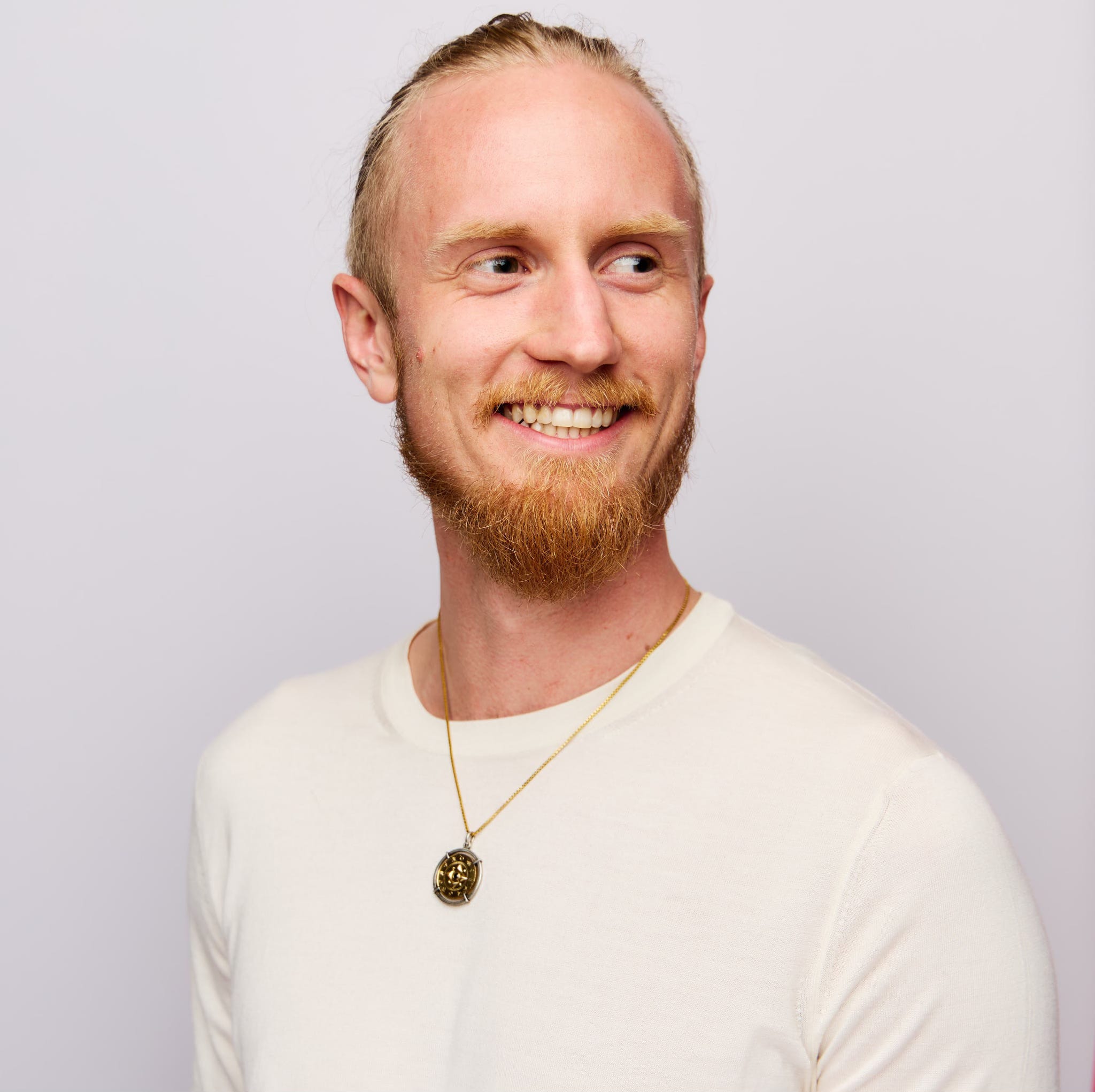
Fredrik Brannlund laughs when I ask him how he would describe himself today.
“Out of the blue, I have a body,” he says.
“I’m very plugged in right now—optimizing sleep, food, movement, routines.
And at the same time, learning how to let go.”
It’s a paradox he returns to often: discipline paired with surrender, structure paired with play. Fredrik is a Swedish entrepreneur, born in Stockholm in 1992, whose work sits at the intersection of health, accountability, and leadership. But the clarity he speaks with today was hard-earned—shaped by early freedom, addiction, ethical compromise, and a long reckoning with responsibility.
This conversation is not about success in the usual sense. It’s about showing up: for yourself, for others, and for the systems you help create.
A Long Leash
Fredrik grew up in the same house until he was eighteen, just outside Stockholm. His childhood was defined less by rules than by trust.
“My mum always said I worked best with a long leash.
The more constraints, the more chaos.”
As a toddler, he wandered. As a boy, he crossed busy streets alone. Neighbors remember a curious blond kid who appeared unannounced for berries, coffee breaks, conversation. Even then, Fredrik was drawn outward—testing the edges of safety, wanting to see what existed beyond the familiar.
That instinct—to explore beyond the container—never left him.
Sweden, Silence, and Boundaries
Growing up Swedish shaped Fredrik in ways he only fully understands now.
“We’re very diplomatic. We avoid conflict.
We find good on both sides and try to make it peaceful.”
There is pride in Swedish craftsmanship—wood, iron, quality products that work. There is also restraint. One of the country’s wealthiest families has a phrase Fredrik loves:
Act in silence.
Create immense value. Don’t brag. Don’t put your face on it.
But that same culture, he says, struggles with boundaries.
“We tolerate everything.
That can turn into confusion—personally and nationally.”
It’s a pattern Fredrik would later recognize in his own relationships and business choices: allowing too much, for too long, then dealing with the consequences.
Selling Candles, Selling Trust
At sixteen, Fredrik was selling candles and socks door-to-door. It was a game—who could sell the most, who could price best, who could work the system.
But what stayed with him wasn’t profit.
“When I made a connection, people invited me into their homes.
I was genuinely curious about how people lived.”
Selling taught him something deeper: how to build trust in ninety seconds. How to listen. How curiosity opens doors faster than technique.
Later, selling magazine subscriptions by phone, he learned another lesson—how to solve problems he found boring.
“I was driven by finding elegant solutions to things I didn’t want to do.”
That instinct—hack the system, then move on—would both serve him and haunt him.
Failure, Then Permission to Dream
As a child, Fredrik wanted to be the best football player in the world.
He failed.
That failure shut down his ability to dream for nearly a decade.
“For years, it was just about saving myself.”
Therapy helped. Learning basic adult skills—paying bills, managing health, keeping a household—helped. At 24 or 25, something reopened.
“My dreams aren’t about stuff.
They’re about how I want to live.”
One early dream was disarmingly simple:
“I wanted to go into a grocery store
and not look at price tags.”
Another?
“Fresh socks and underwear every morning,” he laughs.
Malta: Learning the Game
At nineteen, Fredrik moved to Malta for a customer support job. He arrived broke, barely speaking English, determined not to return home empty-handed.
Malta gave him a crash course in corporate life, politics, and power.
“I wasn’t great at the grind.
I went for groundbreaking results.”
He networked. He befriended founders. He made himself strategically untouchable.
“Rather than creating value, I played politics.”
But Malta also exposed him to the darker side of optimization.
When Growth Has a Body Count
Fredrik worked in online gambling. At first, poker—where winners often won more. Then the industry shifted to slot machines.
“Suddenly, the most valuable customers were the ones who lost everything.”
He spoke daily with addicts. He watched marketing teams optimize without ever meeting the humans behind the numbers.
One story still unsettles him: a marketer who targeted disabled Swedes on welfare, timing ads to the moment government payments arrived.
“He drained them completely.”
Fredrik doesn’t exempt himself.
“In one way or another, I fed the system.”
That realization forced a reckoning.
“This is not the place to make the world a better place.
At that point, I was done.”
Addiction and Responsibility
Leaving gambling coincided with another realization: Fredrik had his own addictions.
Alcohol. Dopamine. Constant stimulation. People.
“If I’m victimizing myself, I’m giving away responsibility for my life.”
Adulthood, for him, became a simple but demanding idea:
“I am in charge of the outcome.”
Not through control—but through ownership.
Creating Something Different
The idea that would become Finally Together began as a system for Fredrik himself.
A friend once told him:
“You see change—and then you go get it.
That’s not common.”
The insight landed hard.
“I realized I could help others.”
During the pandemic, as his remote company struggled mentally, Fredrik tested something simple: shared accountability, light reporting, human presence.
No heavy therapy. No performance pressure.
“Just showing up.”
People checked in with an emoji. One task per week. A rhythm of intention and reflection.
“Showing up matters more than executing perfectly.”
Failing Safely
Every Monday, team members stated what they would do. Every Friday, they reported honestly.
Failure was allowed—if named early.
“Planning is an educated guess.
Integrity is telling the truth before the deadline.”
This created trust. Precision. Humanity.
One colleague later told him:
“Seeing you admit failure made you trustworthy.”
Work, Reimagined
Fredrik believes the future of work demands a different kind of responsibility.
“Remote work requires abstract thinking.
You can’t be told how to move your hands.”
Leaders, he says, shouldn’t tell people what to think.
“A good leader helps people think for themselves.”
His philosophy rejects hustle culture.
“The push-push-push entrepreneur will crash.”
Instead, he plans for the minimum.
“Do the least.
Then choose to do more—joyfully.”
Physical First, Always
Unlike many wellness platforms, Fredrik’s work doesn’t start with mindset.
“If your body is healthy, your thoughts follow.”
The system allows all emotions—anger, grief, boredom.
“Feel them. Don’t project them.”
Observation comes before action.
“You don’t come here to do.
You come here to look.”
That first look is often painful.
“The first week is unpleasant.
You meet yourself honestly.”
But honesty opens capacity.
Letting Go
A turning point came through David Hawkins’ Letting Go.
Fredrik practiced surrender—lying still, allowing boredom, frustration, chaos.
“There is always the option to sink in.”
Spirituality, for him, isn’t escape.
“It’s collaboration with life.”
A Bigger Vision
Fredrik imagines an economy built on energy—not extraction.
“Can we create value without taxing people or the earth?”
His long-term vision includes cities designed to give back more than they take.
But the app isn’t the end goal.
“It’s one step.”
Fifteen years from now?
“I’ll play piano. Go to jazz concerts.
And find new ways to contribute.”
Why This Matters
Listening to Fredrik, what stands out isn’t certainty—but integrity.
“Evolution and acceptance.
Contribution and kindness.”
He laughs easily. Questions himself often. Refuses easy answers.
“If we take this blink of existence too seriously,
we miss the point.”
Electric Memories
This excerpt comes from an 11,000-word life-story interview created as part of the Electric Memories project—a collaborative process that transforms long-form conversation into a lasting narrative artifact. The full interview is at https://electric-memories.com/interview-fredrik-brannlund, also available as a PDF.
If you’re curious what it feels like to:
step back and see the through-line of your life
explore how your values, work, and contradictions fit together
create something reflective, rigorous, and deeply human
That’s the work we do.
More at Electric Memories.